Obsdn dex infrastructure defined
Obsdn dex infrastructure is a specialized trading platform built for perpetual futures, designed to handle assets that standard aggregators ignore. While most perp DEXs compete for liquidity in the same 200 popular tickers, Obsdn focuses on non-standard, emerging, or niche assets that lack deep institutional order books. This approach shifts the focus from mere price aggregation to genuine market creation for assets where traditional liquidity pools simply do not exist.
The infrastructure distinguishes itself by prioritizing open execution and transparent market structure over the closed-loop matching engines common in older DEX models. It does not function as a traditional data center or a simple aggregator that routes orders to the deepest pool. Instead, it provides the underlying rails for trading assets that are often too volatile or illiquid for conventional venues, allowing traders to access price discovery in markets that are otherwise inaccessible.
This structure supports a more efficient capital allocation for traders looking to hedge or speculate on assets outside the mainstream. By building the one exchange that doesn't follow the standard playbook, Obsdn addresses the gap between what traders want to trade and what existing platforms are willing to support.
The shift from product to infrastructure
The decentralized exchange landscape has undergone a fundamental structural change. Early DEXs were built as simple products—standalone mechanisms for swapping assets on-chain. They functioned in isolation, treating each trading pair as a distinct, disconnected entity. Today, obsdn dex infrastructure operates as a multi-layered stack. This evolution moves beyond basic exchange functionality to create a unified environment where liquidity coordination and margin efficiency are central to execution.
This transition addresses the fragmentation that previously plagued on-chain trading. Instead of managing isolated liquidity pools, modern infrastructure allows for the aggregation and coordination of capital across multiple venues. The result is a system that mimics the sophistication of traditional finance without the centralized bottlenecks. Liquidity is no longer static; it moves dynamically to where it is needed most, reducing slippage and improving price discovery.
The core benefit of this architectural shift is margin efficiency. In the old model, capital was locked in separate pools, often sitting idle while other opportunities existed elsewhere. Obsdn dex infrastructure enables unified margin, allowing traders to utilize their assets more effectively across different strategies and venues. This means less capital is tied up in collateral, and more is available for active trading. The infrastructure handles the complexity of cross-venue settlement, freeing the trader to focus on strategy rather than liquidity management.
As the market matures, the distinction between a "product" and "infrastructure" becomes clearer. Products solve specific, narrow problems. Infrastructure provides the foundational layers that support a wide range of financial activities. For obsdn dex infrastructure, this means building the rails for open execution, where liquidity can be sourced, coordinated, and settled with minimal friction. This structural maturity is what allows decentralized trading to scale beyond niche use cases into mainstream financial activity.
The move toward open execution infrastructure represents a maturation of the entire ecosystem. It is no longer just about swapping tokens; it is about building a robust, efficient, and scalable financial network. This shift ensures that obsdn dex infrastructure can support the complex demands of modern trading, from high-frequency strategies to long-term portfolio management. The focus is now on building systems that are resilient, efficient, and capable of handling significant volume.
Live market data and charts
Understanding the obsdn dex infrastructure requires looking at the actual trading conditions these protocols navigate. Static screenshots fade quickly; live data reveals the real-time volatility and liquidity depth that define execution quality.
We use provider-backed widgets to ensure accuracy. The following charts and price feeds reflect current market states, allowing you to assess how the obsdn dex infrastructure performs under active trading pressure.
Execution strategy for high volume
High-volume trading on Obsdn dex infrastructure requires more than just capital; it demands a strategy that prioritizes capital efficiency and minimal market impact. When moving significant size, the primary enemy is slippage, which can erode profits before a position is even fully filled. Obsdn’s architecture addresses this by layering deep liquidity pools with advanced routing algorithms that slice large orders into smaller, less detectable chunks across multiple venues.
This approach mimics the behavior of institutional block trading desks but operates on a decentralized ledger. By leveraging unified margin and coordinated liquidity, traders can access deeper order books without the traditional overhead of centralized intermediaries. The result is a smoother execution curve where the price impact is distributed over time and space, rather than concentrated in a single trade that could move the market against you.
To visualize the current market conditions affecting your execution, you can monitor live price action for major pairs below. This real-time data helps you time your entries and exits to coincide with periods of higher liquidity, further reducing the cost of doing business.
When comparing execution models, it is useful to see how Obsdn’s open execution framework stacks up against traditional Automated Market Makers (AMMs) or Central Limit Order Books (CLOBs). The table below highlights the structural differences in fees, slippage handling, and speed that matter most for high-frequency or large-capacity strategies.
| Feature | Obsdn DEX | Traditional AMM | Centralized CLOB |
|---|---|---|---|
| Slippage Control | Advanced routing with order slicing | High slippage on large trades | Low slippage, but requires deep book |
| Fee Structure | Unified margin, dynamic fees | Flat swap fees, impermanent loss risk | Maker/taker fees, potential hidden costs |
| Speed & Latency | Optimized for batch processing | Variable, dependent on pool depth | Sub-millisecond, highly competitive |
Essential tools and resources
Navigating the obsdn dex infrastructure requires more than just a wallet; it demands a specific set of analytical and execution tools. The ecosystem is designed for high-stakes trading, where speed and data integrity are paramount. To operate effectively, users need access to real-time market data, robust execution layers, and secure hardware.
Market Data and Execution Dashboards
The obsdn dex infrastructure distinguishes itself by moving beyond the standard 200 tickers that dominate other perp DEXs. To trade what matters, you need tools that can handle this unique liquidity landscape. Real-time price feeds and order book depth are non-negotiable for understanding market structure.
For broader market context, monitoring major asset performance helps gauge the health of the underlying infrastructure. The price widget below provides a live snapshot of key benchmarks that often correlate with obsdn dex infrastructure activity.
Hardware for Secure Execution
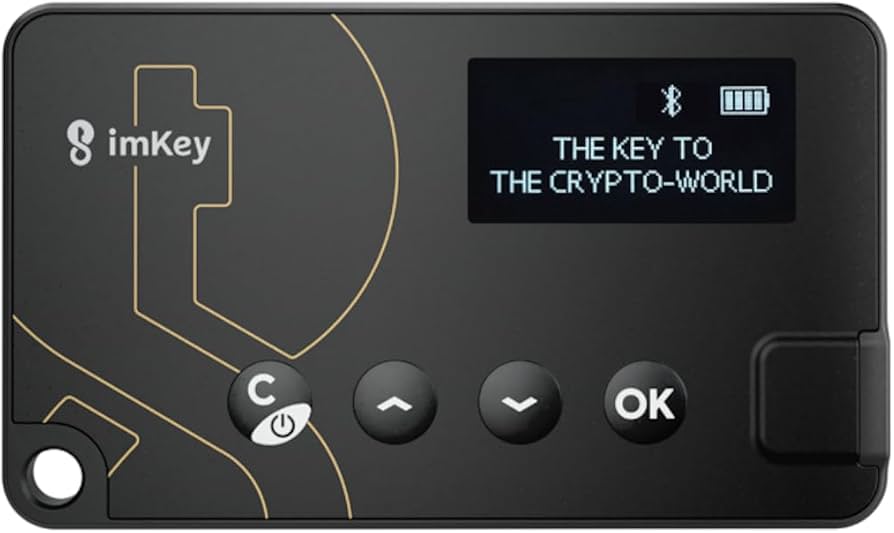
Given the high-stakes nature of decentralized derivatives, security is not an afterthought. Serious participants in the obsdn dex infrastructure ecosystem typically utilize hardware wallets to manage private keys and multi-monitor setups to track complex order flows without distraction. These tools reduce operational risk and improve execution precision.


As an Amazon Associate, we may earn from qualifying purchases.

Checklist for infrastructure adoption
Before committing capital to the obsdn dex infrastructure, verify that the underlying architecture supports your specific execution needs. Open execution models are shifting the industry toward unified margin and liquidity coordination, so ensure the protocol aligns with these modern standards rather than relying on siloed, legacy systems.
Verify Smart Contract Audits
Security is non-negotiable. Ensure the obsdn dex infrastructure has undergone rigorous, independent smart contract audits. Look for clear, published reports from reputable firms that detail any identified vulnerabilities and their remediation status.
Assess Liquidity Depth
Liquidity depth determines slippage and execution quality. Review the obsdn dex infrastructure’s current liquidity pools across your target assets. Thin liquidity can lead to significant price impact, especially during volatile market conditions.
Test API Connectivity
Your trading workflow depends on reliable data feeds. Test the obsdn dex infrastructure’s API latency and reliability under load. Ensure the integration points are stable and that you can execute trades with minimal delay.

Begin by reviewing the audit reports for the obsdn dex infrastructure. Confirm that critical functions like order matching and fund withdrawals have been thoroughly tested and certified by a trusted security firm. This step is foundational.
Analyze the depth of liquidity for the specific trading pairs you intend to use. Use on-chain explorers to check total value locked (TVL) and recent trade volumes to gauge execution stability.

Connect to the obsdn dex infrastructure’s testnet or sandbox environment. Measure response times for order placement and cancellation. Ensure the latency meets your trading strategy’s requirements before moving to mainnet.
Final Integration Check
Once the technical and security checks are complete, perform a small-scale live trade. This real-world test will reveal any unforeseen issues with the obsdn dex infrastructure’s user interface or settlement process. Only then should you scale your exposure.
No comments yet. Be the first to share your thoughts!